The Architecture of a Standard Tennis Court
Every regulation tennis court worldwide adheres to standardized dimensions established by the International Tennis Federation (ITF). However, the way a match feels depends entirely on the material underfoot.
STANDARD COURT DIMENSIONS
Length
23.77 meters (78 feet) from baseline to baseline.
Singles Width
8.23 meters (27 feet) between singles sidelines.
Doubles Width
10.97 meters (36 feet) including doubles alleys.
Net Height
0.914 meters (3 feet) at center; 1.07 meters at posts.
Key Court Markings Explained
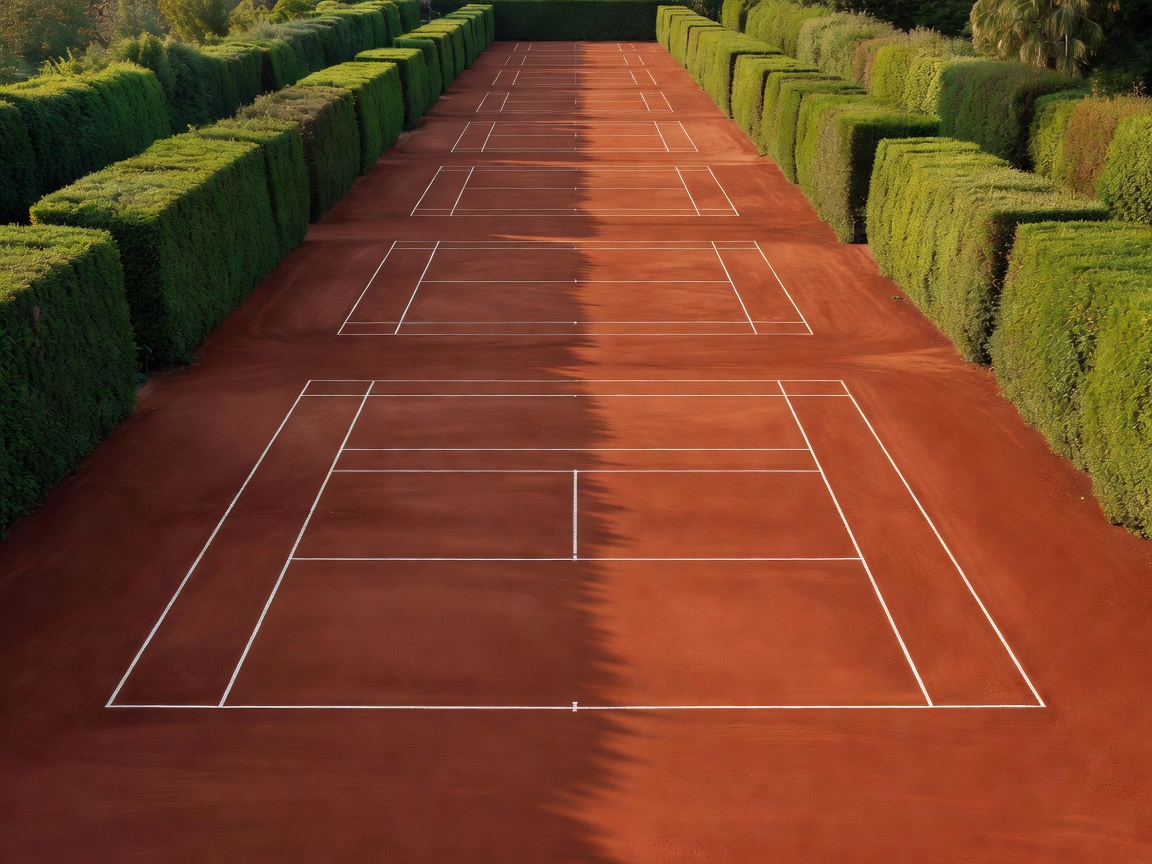
- Baseline: The boundary line at the very back of the court where players serve and rally from deep positions.
- Service Line: The horizontal line situated 6.40 meters (21 feet) from the net that marks the back boundary of the service boxes.
- Center Service Line: The line dividing the service area into equal left and right service boxes (Deuce and Ad boxes).
- Singles & Doubles Sidelines: In singles matches, balls landing in the outer side channels ("alleys") are called out. In doubles, the entire outer perimeter is active.
- Center Mark: A small perpendicular mark on the baseline indicating the exact middle of the court for legal serving positions.
Primary European Court Surfaces Compared
Europe is famous for offering the greatest diversity of playing surfaces in the tennis world. Each surface demands different tactical approaches, physical stamina, and equipment.
| Surface Type | Ball Speed | Bounce Height | Player Movement | Required Footwear |
|---|---|---|---|---|
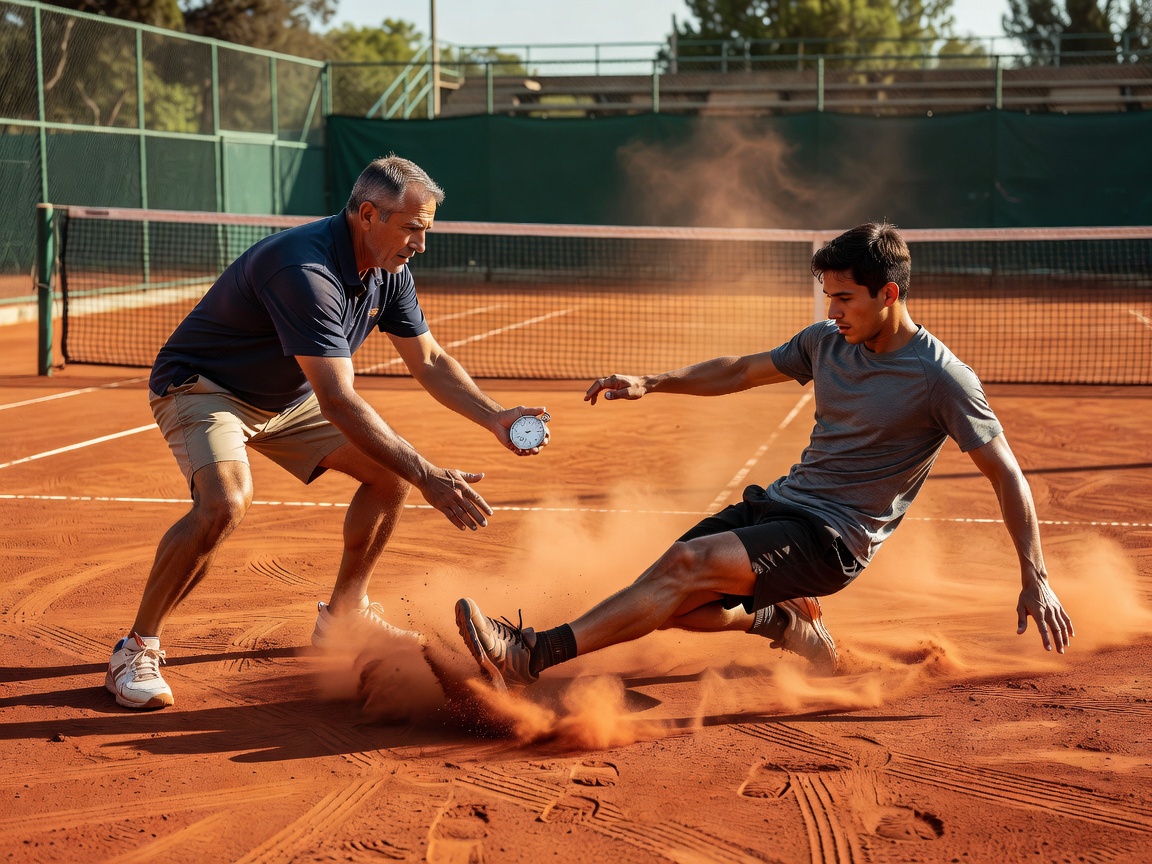
| European Red Clay | Slow | High & Heavy | Controlled sliding, gradual deceleration | Herringbone tread (full herringbone pattern) |
| Natural Grass | Fast | Low & Skidding | Short, balanced steps; quick reflexes | Dimpled grass-court soles or flat soles |
| Acrylic Hard Court | Medium-Fast | True & Predictable | Sudden stopping, strong joint grip | All-court durable rubber compound soles |
| Indoor Carpet / Needlefelt | Fast | Low to Medium | Smooth pivoting without sliding | Smooth non-marking indoor soles |
1. European Red Clay (Terre Battue)
Red clay is not simply soil or dirt. A genuine European clay court consists of five engineered layers: a crushed rock base, gravel, clinker, limestone, and a top dressing of finely powdered red brick just a few millimeters thick.
Tactical Impact: The crushed brick creates high friction upon impact, absorbing forward ball momentum and kicking the ball upward. Rallies are longer, patience is rewarded, and heavy topspin becomes a devastating offensive weapon.
Maintenance: Clay courts must be swept with wide drag mats and watered after every match to prevent the surface from drying out or losing its uniform texture.
2. Natural Lawn Grass
Grass courts are living organisms. Cultivated with specific rye grass mixtures, they provide the fastest and most traditional playing conditions in the sport.
Tactical Impact: The grass blades compress under the ball, causing it to skid forward with very little upward bounce. Slices, low volleys, and aggressive first serves are highly effective. As a tournament week progresses, grass at the baselines wears down into dry earth, subtly changing the bounce.
3. Acrylic Hard Courts & Indoor Arenas
Hard courts feature an asphalt or concrete base coated with acrylic resins mixed with fine silica sand. The amount of sand in the top layers controls the court's pace rating (from slow to fast). Hard courts provide the most consistent, predictable ball bounce and require minimal day-to-day maintenance.
Footwear Rule of Thumb for European Travel
Never play on European red clay with standard running shoes or aggressive trail sneakers. Running shoes chew deep grooves into the delicate clay surface and lack lateral ankle support. Always pack a dedicated pair of herringbone clay tennis shoes, which provide smooth sliding without tearing up the court.